Rail Receiving & Pneumatic Silo Storage
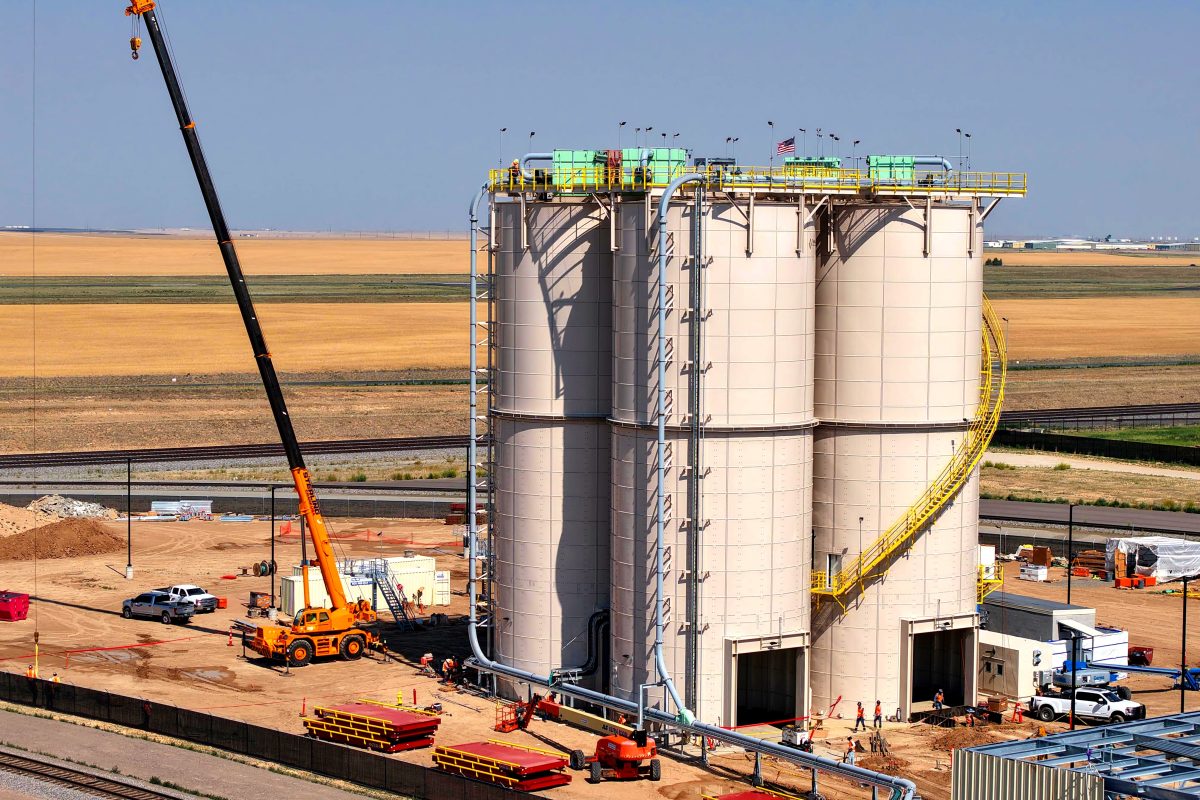
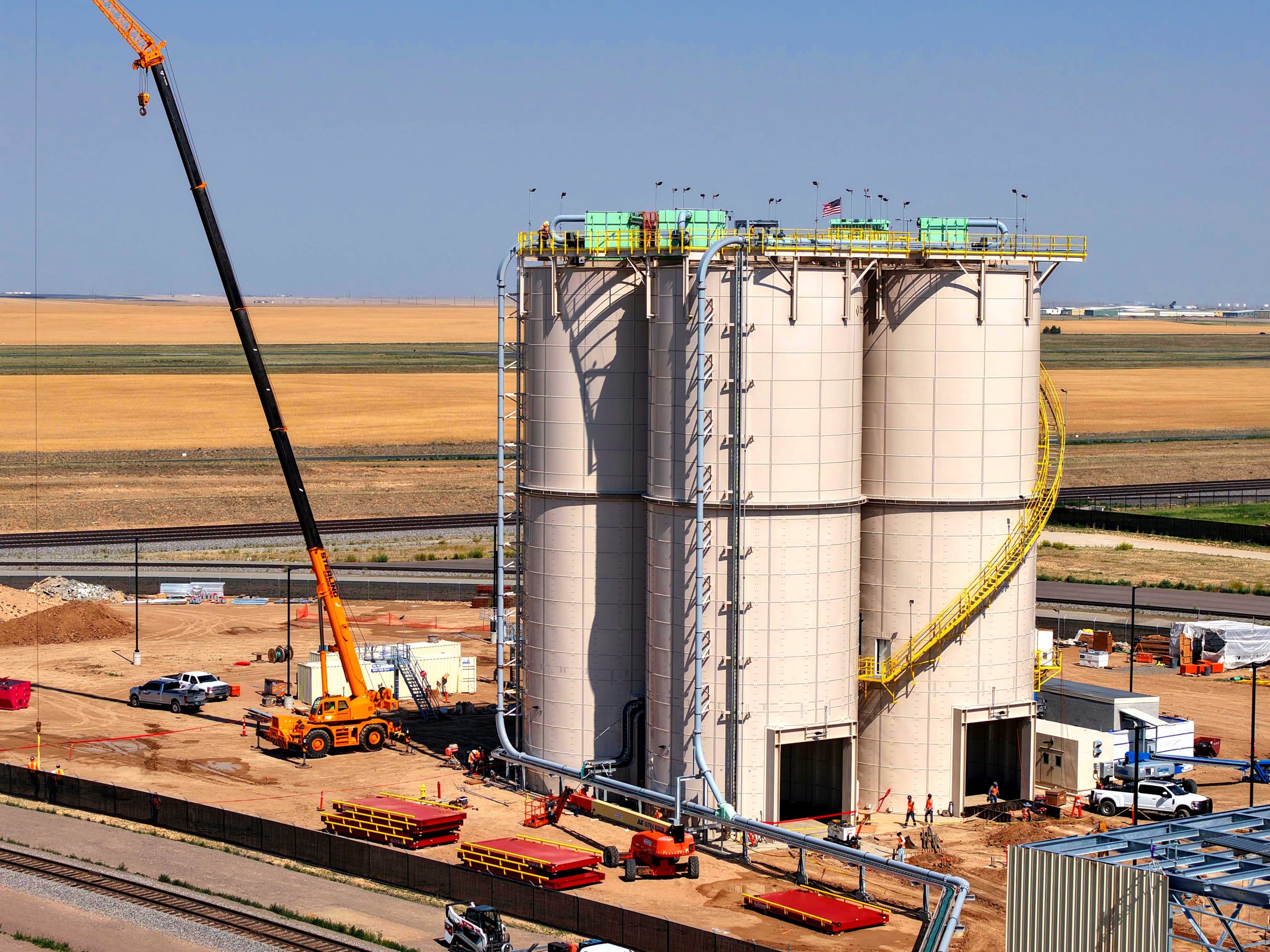
Storage is provided by four drive-through silos. The rail unloading train uses pneumatically actuated boot jacks feeding below-grade inclined cleated belt conveyors that discharge into a common feed bin, then to a screw pump and compressor that pneumatically convey material to any silo through diverter valves. Discharge uses aerated bin bottoms and air slides feeding two retractable loadout spouts onto truck scales.
Dust Control & Automated Truck Loadout
Dust control is extensive, with a rail-unloading dust collector, silo bin vents, and cartridge filter modules at the loadout spouts and air slides, supported by an instrument-air package and a passenger elevator serving the silo bank. ZAP’s scope also included a custom engineered rail offloading building, an office and control building, an electrical room, and an Allen-Bradley control system with redundant network switches and a camera-based loadout monitoring system.
Site Engineering Challenges
Notable engineering challenges included variable site soils with deep undocumented fill requiring mixed foundation strategies, an aviation height constraint that drove the silo and elevator design, below-grade conveyor routing to maintain railroad clearance, and dual-jurisdiction code and noise compliance. The project demonstrates ZAP’s capability to deliver a complete rail-to-truck cement distribution terminal on a full EPC basis.