How ZAP Delivered a Complex, First-of-Its-Kind LNG Facility
Key Points
- The facility’s core equipment is a first-of-its-kind hybrid gas-and-electric integrally geared compression train.
- An 8-MW gas turbine paired with a 4-MW motor-generator keeps the turbine within its efficient 70–100% load band, reducing emissions and fuel use compared to a conventional oversized-turbine design.
- The motor-generator can also produce up to 4 MW of electricity when turbine output exceeds compression demand, improving resilience to grid disturbances.
- ZAP delivered full-scope EPC across gas pretreatment, liquefaction integration, storage, and utilities.
- The project required coordinating five parties — owner, drive train manufacturer, technology licensor, pipeline owner, and utility — into one buildable, permittable design.
The Challenge
Gas turbine power output declines as ambient temperature rises, roughly 0.5% for every 1°F increase. A conventional mechanical-drive train has no way to compensate for this, so operators typically specify an oversized turbine to guarantee sufficient horsepower during peak summer conditions. The tradeoff: that turbine runs at partial load for much of the year, particularly in colder months, reducing fuel efficiency and increasing emissions. For a facility operating across a wide range of seasonal conditions, this inefficiency compounds significantly over the asset’s life.
The Solution
ZAP’s design pairs an 8-MW dry-low-emissions gas turbine with a 4-MW motor-generator on a single integrally geared compressor, a configuration installed here for the first time anywhere. The compressor is pinion-driven from the turbine side and bull-gear-driven from the motor-generator side, eliminating the need for clutches or a separate gearbox, with a single lube oil system serving the full train.
This lets the turbine run year-round near its most efficient design point. When seasonal demand exceeds what the turbine alone can deliver, the grid-connected motor supplies the difference, keeping the turbine within its efficient 70–100% load band and reducing emissions and fuel consumption relative to an oversized turbine at partial load.
The equipment also runs in reverse: when turbine output exceeds compression demand, the motor-generator converts the surplus into up to 4 MW of electricity, letting the facility self-generate power at roughly a quarter of utility cost and reducing exposure to grid disturbances.
Engineering for Every Operating Case
Bringing a first-of-its-kind train from specification to a commissioned operating asset required more than installing the equipment. ZAP engineered the surrounding process, utility, and control systems to account for every operating case, including startup, cooldown, turndown, and full production, across ambient temperature swings from below freezing to nearly 100°F. That full-envelope engineering is where first-of-a-kind delivery experience matters most.
Full-Scope EPC Delivery
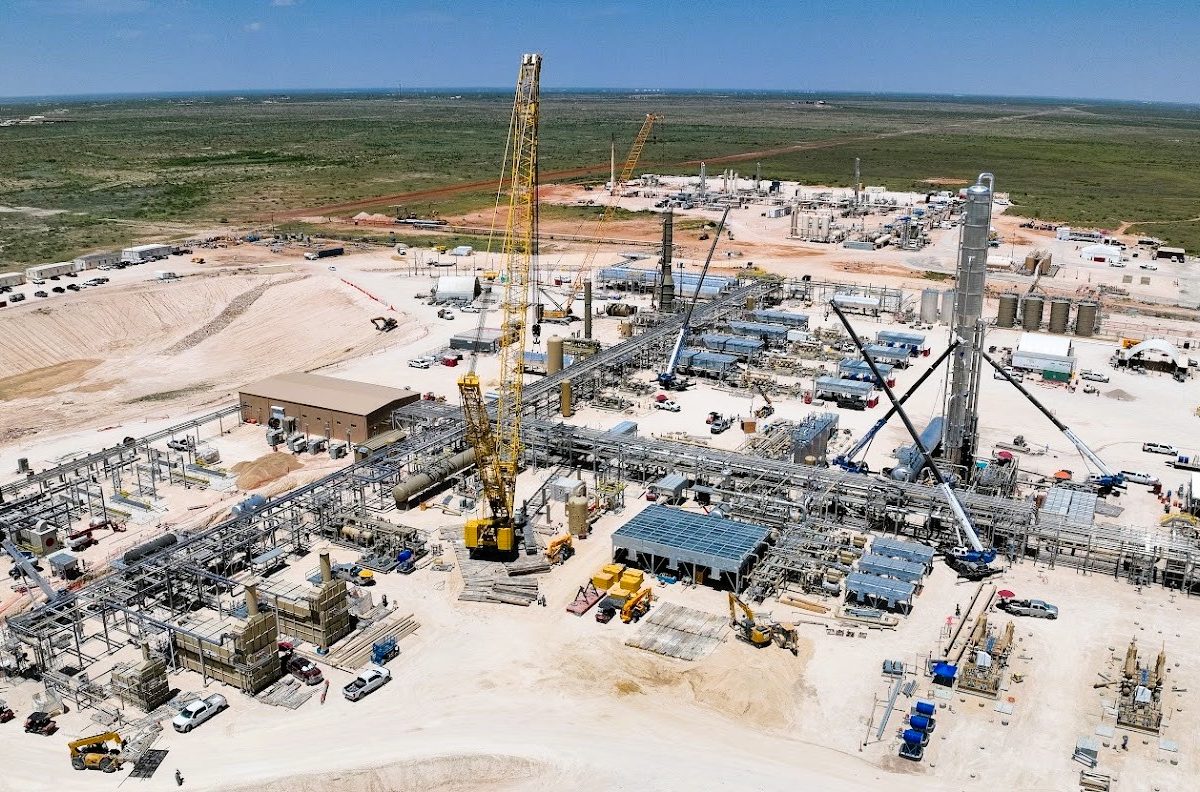
While the compression train represents the facility’s core technology, ZAP’s scope of work extended across the full process and utility footprint. This included:
- Gas pretreatment: an amine system for CO₂ and H₂S removal, mol-sieve dehydration, and the associated regeneration and acid-gas handling required to bring pipeline gas to liquefaction specification.
- Liquefaction and refrigeration integration with a technology licensor, including the cold box, flare cooldown sequencing, and boil-off-gas compression and recovery.
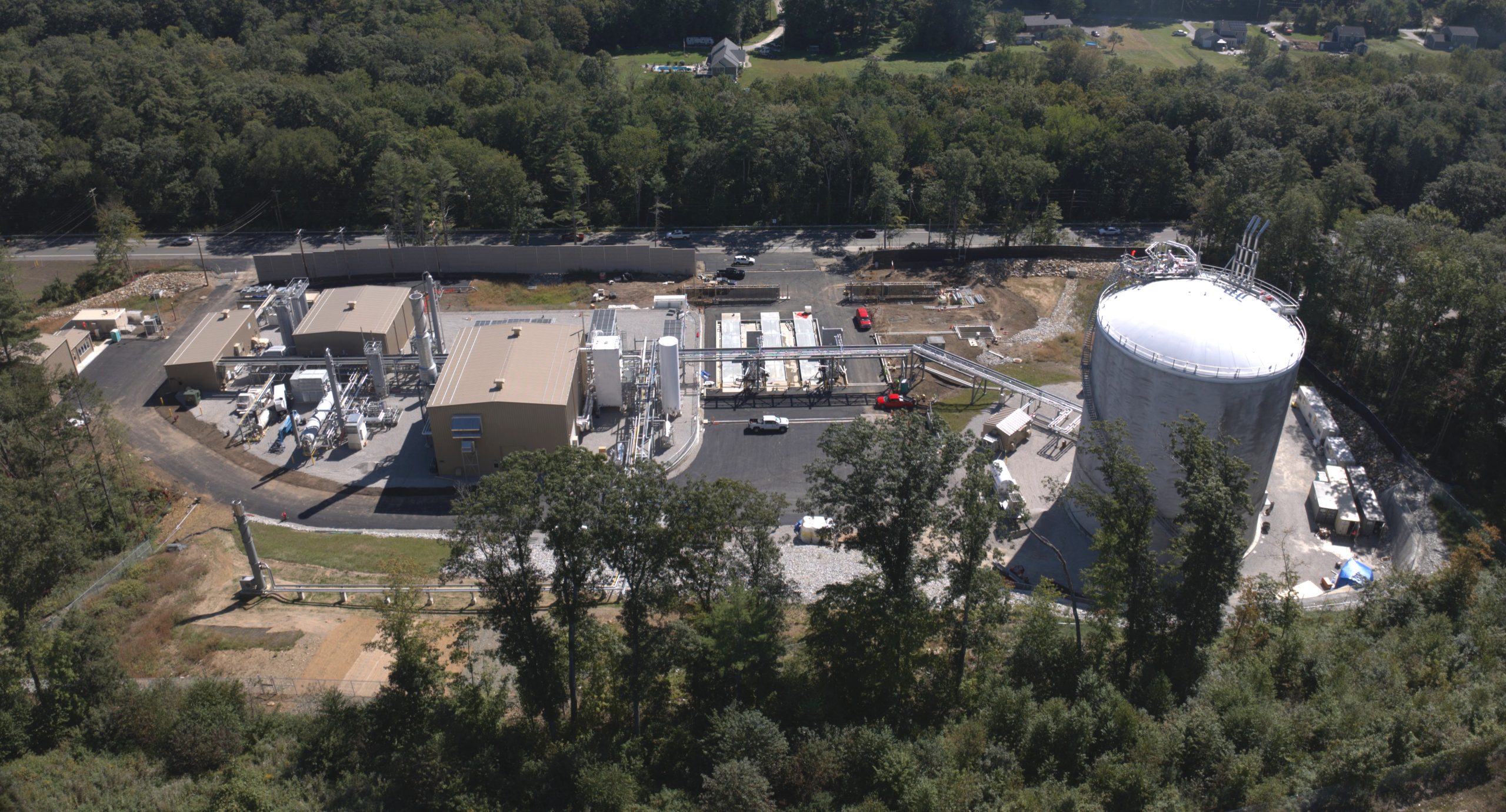
- A double-wall LNG storage tank with in-tank loading pumps and vacuum-jacketed transfer piping to the truck loading skids.
- The balance-of-plant electrical system supporting the hybrid drive, including the interconnection, switchgear, smart motor control center, and a boil-off-gas-fueled backup generator for standby loads during a utility outage.
- The full utility backbone: fuel gas, nitrogen storage and vaporization, instrument air, firewater and high-expansion foam suppression, relief and flare systems, and layered BPCS, safety, and fire-and-gas control architecture.
Project delivery required coordination among multiple stakeholders, including the owner, drive train manufacturer, liquefaction technology licensor, interconnecting pipeline owner, and utility, to align on a single buildable, permittable design across mechanical, electrical, controls, civil, and regulatory scope.
The Results
The completed facility operates a first-of-its-kind hybrid compression system that reduces emissions and fuel consumption compared to a conventional single-drive design, while providing supplemental power generation and improved resilience to grid disturbances. The project demonstrates ZAP’s capability to deliver first-of-a-kind process technology within a fully permitted, code-compliant facility, from initial engineering through commissioning.