
At a Glance
- North American cement producers are shifting their core performance metric from $/ton of clinker to $/ton of cementitious material, driven by decarbonization goals and rising acceptance of blended cements.
- Reducing clinker factor through alternative fuels and supplementary cementitious materials (SCMs) improves plant-level cost and carbon performance, but introduces significant product variability.
- The choice between intergrinding and post-grinding blending of SCMs is a critical, often underappreciated decision that directly affects concrete performance, plant flexibility, and capital cost.
- This variability creates downstream strain on terminal storage, logistics, quality control systems, and sales/specification processes.
- Producers who succeed will take a system-level approach — aligning plant capabilities, equipment investment, and distribution strategy rather than optimizing the kiln in isolation.
From Clinker Cost to Cementitious Cost
North American cement and SCM producers are in the middle of a structural shift — one that begins in the kiln but increasingly shapes decisions at the terminal, in the sales office, and on the jobsite. The industry has moved past an era of tightly controlling fuel costs while shipping one or two standardized high-clinker products. As decarbonization expectations rise and customers grow more accepting of blended products like PLC, the guiding economic metric has shifted from cost per ton of clinker to cost per ton of cementitious material.
As producers push clinker ratios lower to meet this new metric, the question of which blended products to produce — and where they can be sold — is creating real distribution and commercial pressure across the supply chain.
Decarbonization Meets Cost Pressure
Cement production costs have traditionally been dominated by the thermal energy demand of the kiln, fueled by coal, petcoke, and natural gas. Today, producers are aggressively displacing fossil fuels with alternative fuels (AF) — including tire-derived fuel (TDF), refuse-derived fuel (RDF), biomass, and industrial byproducts. Thermal substitution rates (TSR) have climbed steadily across North America, with leading plants now exceeding 50% substitution.
This shift makes sense from both a cost and carbon standpoint: alternative fuels reduce fuel costs, particularly when tipping fees are factored in, and lower fossil fuel consumption directly reduces CO₂ intensity per ton of clinker. At the same time, producers are lowering clinker factor by increasing use of supplementary cementitious materials — slag, fly ash, natural pozzolans, and calcined clays — which reduce cost and embodied carbon by displacing the most energy-intensive component of cement.
The Product Proliferation Problem
These strategies strengthen plant-level economics, but they introduce meaningful variability into the finished product portfolio. Where a plant may once have produced a limited set of standardized products — Type I/II, Type III, and perhaps a single slag blend — many plants now produce multiple blended cements, each with different SCM content, performance characteristics, and regional applicability.
Customer acceptance of these newer blends is uneven across North America. Departments of Transportation, ready-mix producers, and contractors vary widely in their specifications and willingness to adopt lower-clinker or alternative formulations. The result is a fragmented demand landscape, where a single producer may need to supply different products to customers within the same geographic region.
Intergrinding vs. Blending: A Critical, Underappreciated Decision
How SCMs are incorporated into cement — interground with clinker or blended after grinding — is not simply a processing choice. It directly affects hydration kinetics, particle size distribution, and ultimately field performance.
Intergrinding offers advantages in particle size optimization, and finer SCM particles can act as nucleation sites that improve early hydration in some systems. But intergrinding dissimilar materials carries real operational challenges: grindability mismatch between clinker, slag, and limestone can cause overgrinding of softer components and undergrinding of harder phases; existing finish mills — whether ball mills or vertical roller mills — may not be optimized for multi-component grinding, reducing throughput and accelerating wear; and once interground, the product is fixed, limiting a producer’s ability to adjust blend ratios as market demand shifts.
Post-grinding blending, by contrast, offers greater flexibility — producers can adjust SCM ratios dynamically and tailor products to specific customer requirements. But it introduces its own challenges: achieving consistent blending at scale requires precise material handling and dosing systems; separate storage, conveying, and proportioning systems are needed for each component, adding capital and operational cost; and in some cases, contractors perceive blended cements as less consistent than interground products, even when properly controlled.
To date, most producers have interground Type IL (Portland-limestone cement). In many cases, hybrid approaches — intergrinding certain components while blending others — offer a practical balance of performance, flexibility, and capital constraints.
Impact on Concrete Performance
These processing differences show up directly in concrete behavior, often in ways that shape market acceptance. Higher SCM content — particularly with certain fly ashes or natural pozzolans — can extend set times, though interground systems may mitigate this through finer particle distributions. Lower clinker factors generally reduce early strength; while slag and calcined clays can be engineered to compensate, performance depends heavily on fineness and reactivity, both of which are shaped by grinding strategy.
Limestone and fine SCMs can improve workability, but poorly controlled particle size distributions may increase water demand or admixture sensitivity. Long-term durability properties — sulfate resistance, permeability — are often improved with SCMs, but only when blends are consistent and properly proportioned. For ready-mix producers, this variability introduces real risk: mix designs that performed reliably with traditional cements may require adjustment, and inconsistency can translate into jobsite delays or quality concerns.
Strain on Plant Systems, Terminals, and Logistics
The shift toward multi-component cement is exposing limitations in existing plant infrastructure and institutional knowledge. Many legacy finish grinding systems were designed for clinker-gypsum systems and retrofitting them for multi-component grinding may require separator upgrades, additional grinding capacity, or parallel grinding lines. Introducing multiple SCM streams requires new feed bins, weigh feeders, and conveying systems — upgrades that can be difficult to fit into space-constrained older plants.
Maintaining consistent quality across multiple blends demands more sophisticated sampling, testing, and process control, often requiring digital upgrades and automation, while increased material variability and higher fineness targets can accelerate wear on critical components. Personnel must also be retrained on modified systems and new QC metrics.
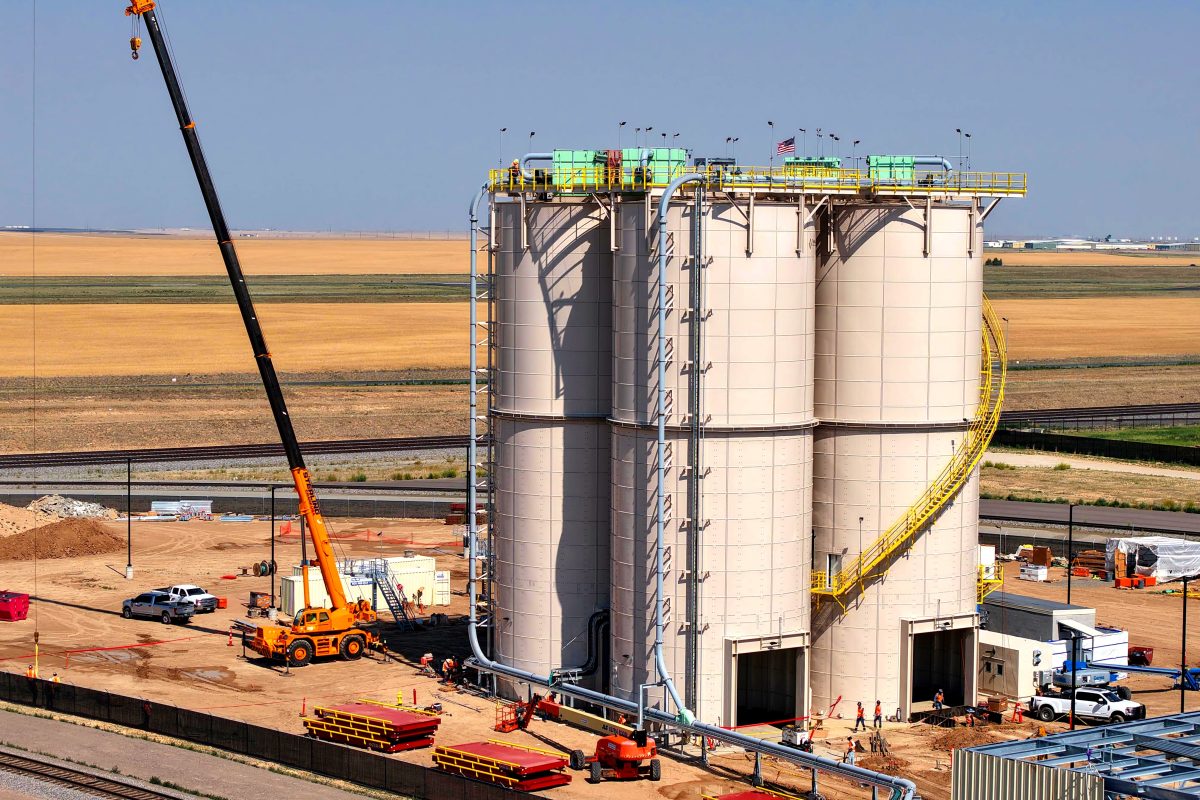
This complexity extends into distribution. Cement terminals historically designed for a limited number of products are now expected to handle a growing range of blended cement and SCM combinations. Each additional product requires dedicated storage to prevent cross-contamination — meaning more silos, more conveying infrastructure, and more complex inventory management. In many high-demand regions, terminals are already capacity-constrained, forcing producers into difficult trade-offs between product availability and operational efficiency.
Capital Allocation Uncertainty
The cumulative effect of these factors is a significant increase in uncertainty around capital investment. Decisions about mill upgrades, blending systems, terminal expansions, and storage infrastructure must now account for SCM sourcing and performance implications, the adaptability of existing equipment, the likelihood of market acceptance for specific blends, and the risk of operational inefficiencies across the supply chain. What was once a relatively linear investment model has become a multi-variable optimization problem.
From Kiln to Customer: A System-Level Approach
The North American cement industry is discovering that the push to lower cost per ton and reduce carbon intensity doesn’t stop at the kiln. Fuel choices, SCM type and proportion, and the method of incorporation — intergrinding versus blending — cascade through the entire value chain, from manufacturing decisions to concrete performance, customer acceptance, terminal design, and logistics efficiency.
Producers who successfully navigate this transition will take a system-level view — aligning plant capabilities, equipment investment, distribution infrastructure, and customer engagement strategy. In doing so, they won’t just reduce costs and carbon; they’ll build the flexibility needed to compete in an increasingly complex, performance-sensitive market.